How to Choose the Right Biomass Briquette Supplier for Your Industry
Finding the right biomass briquette supplier is an important decision for industries that depend on solid fuels for steam generation, heating and other thermal applications.
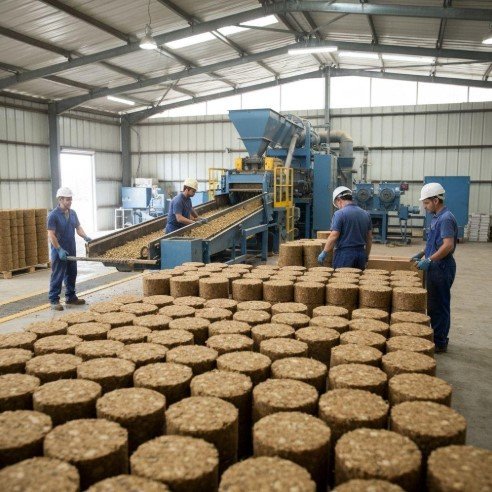
Biomass briquettes are produced by compressing suitable biomass residues into solid fuel blocks. They can be considered as an alternative fuel option for compatible industrial boilers and heating systems.
However, selecting a supplier based only on price can create problems with fuel quality, delivery schedules and production continuity.
In this guide, we explain how industrial buyers can choose a reliable biomass briquette supplier and what factors they should evaluate before placing a bulk order.
What Should You Know About Biomass Briquettes?
Biomass briquettes are manufactured using materials such as sawdust, wood waste and suitable agricultural residues.
These materials are processed and compressed to produce solid fuel blocks for industrial applications.
Their performance depends on factors such as raw material composition, calorific value, moisture content, ash content, density and manufacturing quality.
Industries should always check product specifications before purchasing.
7 Important Factors to Consider When Choosing a Biomass Briquette Supplier
1. Check Biomass Briquette Quality
Fuel quality is one of the most important factors when selecting a supplier.
Ask for product specifications covering:
- Gross or net calorific value, clearly identified.
- Moisture content.
- Ash content.
- Briquette dimensions.
- Density and consistency.
Request a recent laboratory test report wherever possible. Compare the specifications with your boiler’s fuel requirements.
2. Evaluate Production Capacity
Industrial customers often require regular and substantial quantities of biomass briquettes.
Before selecting a supplier, understand their production capacity and ability to fulfil your monthly requirements.
Ask questions such as:
- What is the available monthly production capacity?
- Can the supplier handle bulk orders?
- Can the supplier support regular deliveries?
- How are production shortages managed?
A supplier should be able to explain how they plan to meet your demand.
3. Confirm Raw Material Availability
Biomass briquettes are produced from suitable biomass materials.
The availability of these raw materials can influence production consistency, quality and supply continuity.
Discuss the supplier’s raw material sourcing arrangements and how they maintain consistent product specifications throughout the year.
4. Compare Biomass Briquette Prices
Price is important, but the lowest price does not always represent the best value.
When comparing quotations, consider:
- Price per metric tonne.
- Calorific value.
- Moisture and ash content.
- Transportation charges.
- Loading and unloading costs.
- Applicable taxes and payment terms.
Compare the effective fuel cost per unit of useful heat wherever reliable data is available.
5. Check Transportation and Delivery Facilities
For industries using biomass briquettes regularly, timely delivery is essential.
Discuss the supplier’s delivery locations, transportation arrangements, vehicle availability and expected delivery timelines.
Also confirm whether the quoted price includes transportation or whether freight is charged separately.
6. Ask for Samples Before Bulk Purchasing
Before placing a large order, request a product sample.
A sample can help your technical team evaluate:
- Physical condition and dimensions.
- Moisture content.
- Ash content.
- Combustion characteristics.
- Compatibility with existing fuel feeding equipment.
Where possible, conduct a controlled trial in consultation with your boiler operator or technical team.
7. Check Supplier Reliability and Communication
A reliable supplier should provide clear product information, transparent quotations and regular updates about orders.
Evaluate the supplier’s ability to communicate, respond to technical questions and manage delivery commitments.
Long-term industrial fuel arrangements depend on both product quality and dependable service.
Questions to Ask Before Buying Biomass Briquettes in Bulk
Before finalising a purchase, ask the supplier these questions:
- What raw materials are used to manufacture the briquettes?
- What is the calorific value of the product?
- What are the moisture and ash specifications?
- What sizes and dimensions are available?
- What is the minimum order quantity?
- Can you supply our monthly fuel requirement?
- What are the delivery locations and transportation charges?
- Can you provide a sample and quality test report?
These questions can help your purchasing team make a more informed decision.
Why Industries Consider Biomass Briquettes
Industries may evaluate biomass briquettes for several reasons:
- They provide an alternative solid-fuel option.
- They utilise suitable biomass residues.
- They can be used in compatible industrial heating systems.
- Their compressed form supports bulk handling and transportation.
- They may support fuel diversification strategies.
The actual economic and environmental benefits depend on sourcing, fuel quality, transportation, combustion efficiency and the industrial application.
Which Industries Can Purchase Biomass Briquettes?
Biomass briquettes may be considered by different industrial sectors, including:
- Textile manufacturing.
- Food processing.
- Paper and pulp.
- Chemical manufacturing.
- Brick kilns.
- Ceramics.
- Other industries using compatible solid-fuel boilers and heating systems.
Before switching fuels, businesses should confirm boiler compatibility and evaluate combustion performance.
Why Choose the Right Biomass Fuel Partner?
An industrial fuel supplier should understand that businesses need more than just a product quotation.
They need consistent quality, dependable supply arrangements, transparent pricing and clear communication.
Building a professional relationship with a capable supplier can help purchasing teams plan fuel procurement and reduce supply-related uncertainty.
Frequently Asked Questions
1. How do I find a reliable biomass briquette supplier?
Check product specifications, test reports, production capacity, raw material sourcing, delivery arrangements and customer references before finalising a supplier.
2. What is the price of biomass briquettes in India?
Biomass briquette prices vary according to raw materials, calorific value, moisture content, order quantity, location and transportation costs. Request a current quotation from suppliers.
3. Can I purchase biomass briquettes in bulk?
Yes. Industrial buyers can contact suppliers to discuss bulk order quantities, monthly requirements, pricing and delivery arrangements.
4. What is the minimum order quantity for biomass briquettes?
The minimum order quantity depends on the supplier’s production, packaging and transportation arrangements. Confirm the quantity directly before placing an order.
5. Can biomass briquettes be used in existing industrial boilers?
Some industrial boilers can use biomass briquettes, but compatibility depends on boiler design, combustion system, fuel feeding arrangements and product specifications. Consult your boiler manufacturer or technical team before switching.
Conclusion
Choosing the right biomass briquette supplier requires more than comparing prices. Industrial buyers should evaluate fuel quality, production capacity, raw material availability, transportation arrangements and the supplier’s ability to meet regular demand.
A careful evaluation can help businesses make better fuel procurement decisions and identify a suitable long-term supply partner.
Looking for biomass briquettes for your industrial requirements?
Contact LR Bioenergy Industries to discuss your bulk biomass fuel requirements, product specifications and supply enquiries.
Website: https://lrbioenergyindustries.in/
Contact our team for further information.