Industrial Uses of Biomass Briquettes: Applications Across Different Industries
Industries across India are exploring alternative fuels to manage energy costs and reduce their dependence on conventional fossil fuels. Biomass briquettes have become an option worth considering for industrial heating and thermal energy applications.
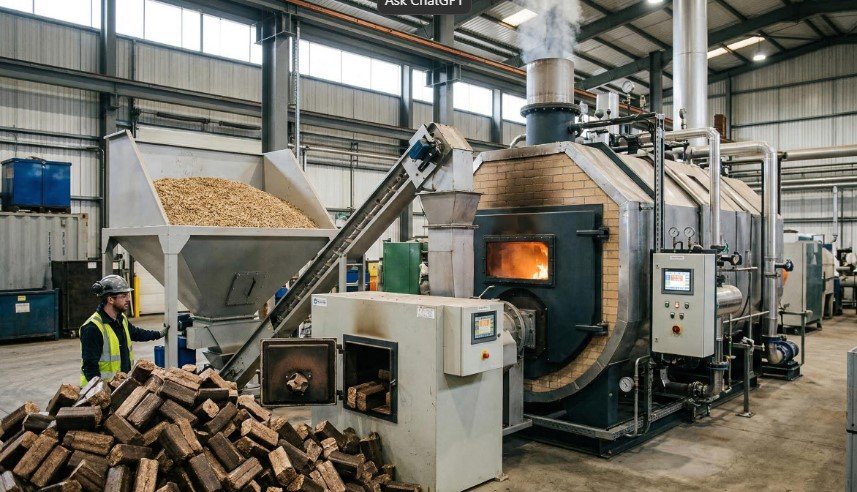
Made from compressed agricultural and other suitable biomass residues, biomass briquettes can be used as solid fuel in compatible industrial boilers, furnaces and heating systems.
In this article, we explore the industrial uses of biomass briquettes, the sectors that may benefit from them and the important factors businesses should consider before switching fuels.
What Are Biomass Briquettes?
Biomass briquettes are solid fuel blocks produced by compressing suitable biomass materials under high pressure. Depending on the manufacturer and product specification, raw materials may include sawdust, agricultural residues, wood waste and other biomass materials.
The compression process creates a denser fuel that can be handled, stored and transported for industrial use.
Biomass briquettes are generally considered a renewable fuel option when produced from responsibly sourced biomass residues.
7 Major Industrial Uses of Biomass Briquettes
1. Textile Industry
The textile industry requires thermal energy for processes such as dyeing, washing, drying and finishing.
Suitable biomass briquettes can be used in compatible steam boilers and heating systems to generate the heat required for these operations.
2. Food Processing Industry
Food processing facilities use heat and steam for various manufacturing activities, including cooking, drying, processing and cleaning.
Depending on boiler compatibility and fuel specifications, biomass briquettes may serve as an alternative solid fuel for selected food processing applications.
3. Paper and Pulp Industry
Paper manufacturing involves several energy-intensive processes, including drying and steam generation.
Industrial boilers using suitable biomass briquettes can support thermal energy requirements where the equipment and fuel specifications are compatible.
4. Chemical and Pharmaceutical Industry
Many chemical and pharmaceutical manufacturing facilities require controlled heat and steam for production processes.
Biomass briquettes may be considered for suitable boiler applications after evaluating temperature requirements, fuel consistency, emission controls and equipment compatibility.
5. Brick Manufacturing Industry
Brick kilns require substantial heat to dry and fire bricks.
Some kiln operators consider biomass-based solid fuels, including briquettes, depending on kiln design, fuel feeding arrangements and required combustion characteristics.
6. Hotels and Commercial Heating Facilities
Large hotels, institutions and commercial facilities may use boilers for hot water, laundry and heating requirements.
Where suitable solid-fuel boiler systems are installed, biomass briquettes may be evaluated as an alternative fuel.
7. Other Manufacturing Industries
Industries involved in ceramics, engineering, manufacturing and other thermal processes may also explore biomass briquettes.
The suitability depends on the required temperature, boiler or furnace design, fuel quality and operating conditions.
Benefits of Using Biomass Briquettes in Industries
Businesses evaluating biomass briquettes may consider the following advantages:
- Utilisation of biomass residues: Suitable agricultural and wood-based residues can be converted into useful solid fuel.
- Alternative fuel option: Briquettes may provide an alternative to conventional solid fuels in compatible equipment.
- Convenient handling: Their compressed form can make storage and transportation more manageable.
- Potential supply flexibility: Businesses may evaluate locally available biomass resources and supply arrangements.
- Waste resource utilisation: Using suitable biomass residues can support better utilisation of available materials.
Actual benefits depend on fuel quality, sourcing, transportation, boiler efficiency and operating costs.
How to Select the Right Biomass Briquettes for Your Industry
Before purchasing biomass briquettes, industrial buyers should evaluate several important specifications.
1. Calorific Value
Calorific value indicates the amount of heat energy released during combustion. Compare the supplier’s test results with your boiler’s fuel requirements.
2. Moisture Content
High moisture content can affect combustion performance and useful heat output. Ask suppliers for the moisture specification and test report.
3. Ash Content
Ash content affects residue generation, cleaning frequency and boiler operation. Select a product that meets your equipment requirements.
4. Briquette Size and Shape
Check the briquette dimensions and shape to ensure they are suitable for your fuel feeding and combustion system.
5. Consistent Supply
Industrial operations require reliable fuel availability. Evaluate the supplier’s production capacity, delivery arrangements and ability to meet your monthly demand.
6. Total Operating Cost
Do not compare fuels only on their price per tonne. Consider calorific value, transportation, handling, storage, combustion efficiency and maintenance costs.
Biomass Briquettes vs Conventional Industrial Fuels
Biomass briquettes and conventional fuels differ in their source materials, production methods, combustion characteristics and environmental considerations.
Biomass briquettes are manufactured from suitable biomass residues, while coal is a fossil fuel. However, the actual performance and economics of each fuel depend on its specifications and the industrial equipment in which it is used.
A proper technical and commercial assessment is recommended before making a fuel-switching decision.
Why Choose a Reliable Biomass Briquette Supplier?
Choosing the right supplier is important for maintaining consistent industrial operations.
Before finalising a supplier, check:
- Product specifications and quality test reports.
- Raw material sourcing and product consistency.
- Production and monthly supply capacity.
- Transportation and delivery arrangements.
- Commercial terms and long-term supply capability.
A dependable supplier should be able to explain the product specifications and help buyers assess whether the fuel is suitable for their application.
Frequently Asked Questions
1. Which industries use biomass briquettes?
Textile, food processing, paper, chemical, pharmaceutical, brick manufacturing and other industries may use biomass briquettes in compatible heating systems and boilers.
2. Can biomass briquettes replace coal in industrial boilers?
In some applications, biomass briquettes may be used as an alternative to coal. However, boiler compatibility, combustion performance, fuel specifications and required modifications must be assessed first.
3. Are biomass briquettes suitable for steam boilers?
They can be suitable for certain solid-fuel steam boilers designed or adapted to burn biomass briquettes. Always confirm compatibility with the boiler manufacturer or a qualified technical professional.
4. What factors affect the quality of biomass briquettes?
Important factors include raw material, calorific value, moisture content, ash content, density, dimensions and consistency.
5. How can industries purchase biomass briquettes in bulk?
Industrial buyers can contact biomass fuel suppliers directly, share their monthly fuel requirement and request product specifications, pricing and delivery details.
Conclusion
Biomass briquettes offer industries another solid-fuel option for suitable thermal energy applications. From textile and food processing to paper manufacturing and brick production, different sectors may evaluate their suitability based on fuel specifications and equipment requirements.
Before choosing a biomass briquette supplier, compare product quality, supply capacity, transportation costs and overall operating economics.
Looking for biomass briquettes for your industrial requirements?
LR Bioenergy Industries can be contacted to discuss your biomass fuel requirements and product availability.
Visit our website: https://lrbioenergyindustries.in/
Contact our team to discuss your industrial fuel requirements.